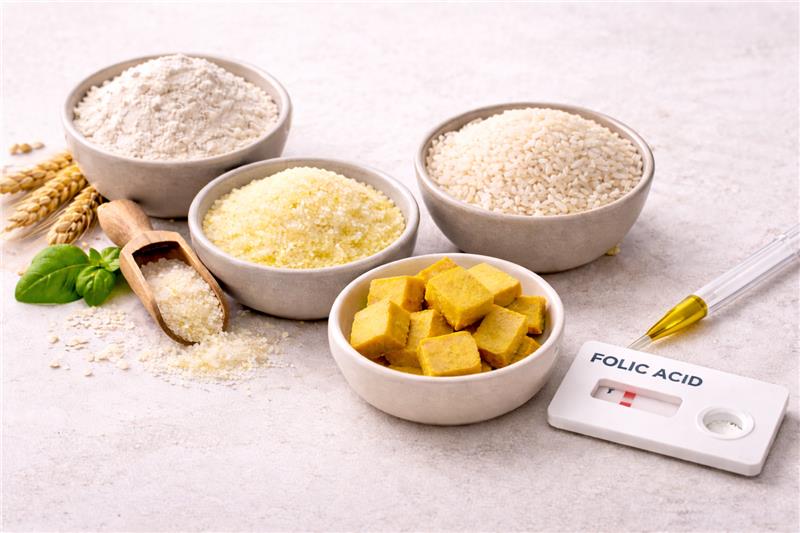
QuImpact, with support from Gates Foundation, is developing a rapid, easy-to-use test to detect folic acid in fortified foods.
Image source: AI-generated
Development of a field-ready test to verify folic acid fortification in staple foods
The project aims to support food producers, regulators, and nutrition programs by enabling fast and reliable quality control directly at the point of production or inspection – without the need for laboratory infrastructure.
Why This Project Matters
Micronutrient deficiencies, often called hidden hunger, affect billions of people worldwide and remain a major public health challenge, particularly in low- and middle-income countries. One of the most critical micronutrients is folic acid (vitamin B9), which is essential for healthy cell development and plays a key role in preventing neural tube defects such as spina bifida when consumed before and during early pregnancy.
Food fortification with folic acid is a proven and cost-effective intervention. Countries that have implemented mandatory folic acid fortification have seen significant reductions in birth defects. However, these benefits can only be achieved if fortified foods actually contain the required nutrient levels.
The Challenge: Ensuring Quality in Fortified Foods
Despite existing regulations, many foods labeled as “fortified” do not meet national or international standards due to under-fortification or missing fortification altogether. One major reason is the lack of practical quality control tools.
Current methods for measuring folic acid rely on laboratory-based techniques such as HPLC or microbiological assays. While accurate, these methods are expensive, slow, and require specialized equipment and trained personnel. As a result, routine monitoring is often impossible, especially in settings with limited laboratory capacity. This leads to delayed feedback, weak enforcement, and reduced public health impact.
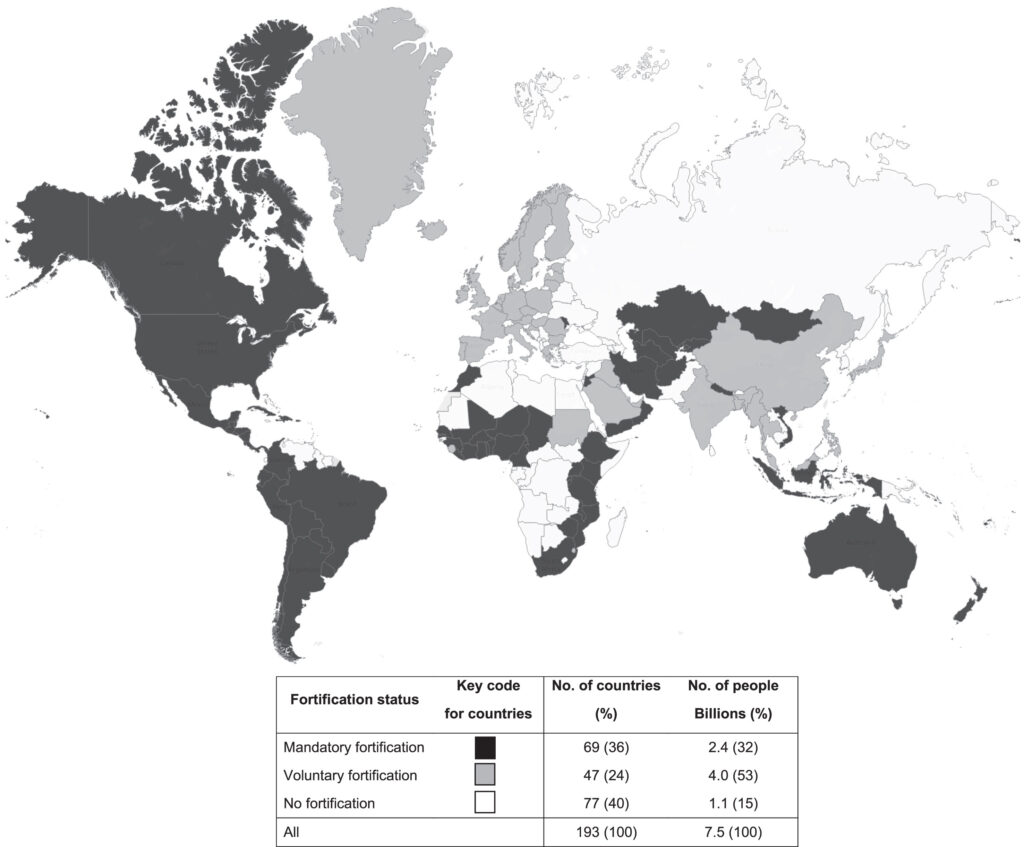
Distribution of folic acid fortification types by country. Image source: Quinn et al. (2024), eClinicalMedicine, Figure 2.
To address this gap, QuImpact is developing a rapid lateral flow test for folic acid detection in fortified foods such as wheat flour, rice, salt, and bouillon cubes.
QuImpact’s Solution
The test is based on thermostable camelid-derived nanobodies, which are highly specific and remain stable under high temperatures and humidity. This makes the test particularly suitable for use in challenging field conditions.
Key features of the test include:
Fast results in under 15 minutes
Portable and field-ready, with no need for refrigeration or laboratory equipment
Simple to use, enabling non-specialists to perform tests
Flexible application, allowing both:
Qualitative screening (presence/absence of folic acid), and
Quantitative measurement using a simple reader or smartphone-based solution
Expected Impact
By making folic acid testing faster, simpler, and more affordable, this project helps close a critical gap in food fortification programs. The rapid test enables:
Food producers to check fortification during production
Regulators to verify compliance more frequently
Nutrition programs to respond quickly when problems occur
Ultimately, the project supports more reliable fortification, stronger regulatory systems, and better protection of vulnerable populations – especially women of reproductive age and young children.